Showing posts with label tata group. Show all posts

Tuesday, 29 December 2020

𝐈𝐧 𝟐𝟎𝟐𝟎, 𝐭𝐡𝐞 𝐈𝐧𝐝𝐢𝐚𝐧 𝐀𝐯𝐢𝐚𝐭𝐢𝐨𝐧 𝐒𝐞𝐜𝐭𝐨𝐫 𝐬𝐚𝐰 𝐢𝐭𝐬 𝐰𝐨𝐫𝐬𝐭 𝐲𝐞𝐚𝐫.

Although the pandemic has impacted industries hard, the aviation industry was among the world's worst-hit in 2020. In India, when the Covid-19 lockdown was enforced in March, air travel was limited. Since May 25, scheduled domestic flights have been resumed in a restricted way.
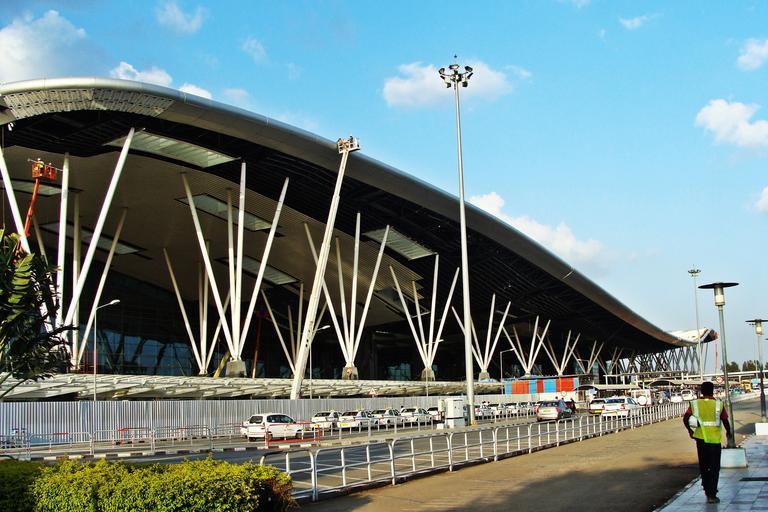

In 2020, the COVID-19 pandemic had a huge effect on the Indian aviation industry, and major airlines facing losses and tough times laid off staff sent them on leave without pay or reduced their salaries.

In April, AirAsia India cut the wages of its senior staff by up to 20 percent. Starting in April, Vistara launched a seniority-based leave without pay policy for its employees. Indian airlines currently operate domestic flights at approximately 80 percent of their pre-COVID levels. By March 2021, domestic services are projected to hit their pre-COVID levels.

In October, CAPA India predicted that the Indian aviation industry will lose a combined USD 6-6.5 billion in FY21, of which USD 4-4.5 billion will be accounted for by airlines.

It is expected that the revival of overseas travel will be slower and more complex than domestic travel. In particular, this will hurt Air India, as about 60% of its revenue was previously generated from foreign operations.

The October 17 bid to revive Jet Airways was won by a consortium of UAE-based businessman Murari Lal Jalan and London's Kalrock Capital. The airline is expected to start operating by the summer of 2021.

The consortium said it is awaiting NCLT and other regulatory approvals by the Ministry of Civil Aviation and the Directorate General of Civil Aviation, including the reinstatement of slots and bilateral traffic rights (DGCA). Slots are important commodities in the aviation industry, which is the time zone at which a flight can land at the airport, as well as bilateral traffic privileges, the amount of flights that an airline can fly to the city of another country.

Consolidation, along with progress on the disinvestment of Air India, could also be a theme to look out for in the coming year.

In 2021, investors can watch for consolidation in the post-covid world of the aviation market. Eventually, we expect three major groups to survive—IndiGo, the Tatas and SpiceJet Ltd.

The Indian aviation sector is hoping for a much better year compared to 2020, with the anti-coronavirus vaccine likely to begin in 2021. On December 21, India announced that all UK-connected passenger flights will be suspended from December 23 to December 31.

Monday, 14 December 2020

𝐓𝐚𝐭𝐚'𝐬 𝐎𝐟𝐟𝐞𝐫 𝐅𝐨𝐫 𝐀𝐢𝐫 𝐈𝐧𝐝𝐢𝐚.

 Tata Group, India's biggest conglomerate, is accepted to have presented an expression of interest (EOI) for the ambushed public transporter Air India throughout the end of the week. It is found out that the vehicle used to record the interest in AI is AirAsia India, where Tata Sons has a critical greater part stake.


A gathering of 200 Air India representatives also is required to put an expression of interest, the cutoff time for which is Monday 5pm. The group professes to have a monetary financial specialist locally available. Ajay Singh of SpiceJet too is peering toward AI however the homegrown transporter declined to remark. Not at all like May 2018, when the main endeavor to sell AI finished without any admirers, this time around, there are different interests.

Despite the fact that Tata Sons runs a head full-administration transporter, Vistara, in partnership with Singapore Airlines, it chose to course its AI interest through budget transporter AirAsia India. Singapore Airlines was not sharp in partaking in the privatization program of the generally distressed AI, as it would just add to Vistara's and its own monetary difficulties.

The Southeast Asian organization is amidst raising liquidity after it posted its greatest quarterly loss because of a dive in travel request in light of Covid. Then, AI's obligation-cum-liabilities' consolidated weight is nearly Rs90,000 crore.

Sources said that since AirAsia India was framed before Vistara, the former's contract permits it to enter the full-administration business. As of late, Tata Sons expanded its stake in AirAsia India from 51% after the Malaysian accomplice communicated its powerlessness to inject new funds into the joint endeavor because of monetary difficulties in its nation of origin. The Tata Group—which established AI as Tata Airlines in October 1932—is being viewed as the most probable winner, as per industry watchers. The government authority assumed responsibility for AI in 1953.

The government authority has this time generously improved the deal terms for AI. It has offered available to be purchased its 100% stake in AI and AI Express — rather than 76% in the first endeavor — and the whole half it claims in-ground dealing with joint endeavor AI-SATS. Likewise, potential purchasers will currently bid on an Enterprise Value (EV) premise.

This implies as opposed to being needed to take on a pre-fixed degree of Rs 23,000 crore obligation of the airline, they will currently cite an EV dependent on their gauge of the joined estimation of AI's value and obligation. Winning bidders will be settled on who cites the most noteworthy EV esteem, and in any event, 15% of this worth should be paid in actual money while the rest can be assumed as an obligation.

Bidders had looked for an explanation from the Department of Investment and Public Asset Management (DIPAM) with respect to the changes. One of them, referring to immense money necessities for things like up-gradation of the AI fleet and VRS program, proposed the government authority to sell AI without requesting any forthright money installment.